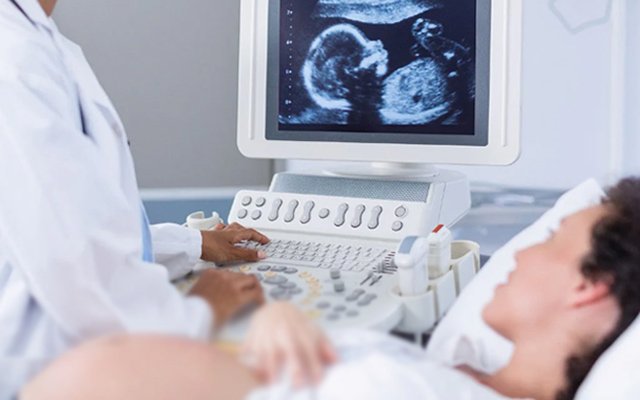
Your baby is growing every day, and growth scans help you follow that beautiful journey with clarity. These scans check your baby’s size, estimated weight, fluid level, placenta position, movements, and blood flow when needed.
As your pregnancy moves ahead, these scans become an important way to understand your baby’s growth, wellbeing, and development more clearly.
Why Growth Scans Matter After the First Trimester
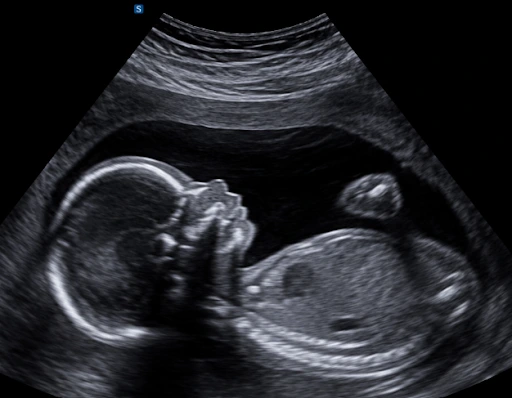
Once the first trimester is over, pregnancy does not stop needing close observation. Your baby starts growing faster, organs continue developing, and your doctor may want to understand whether the baby is growing as expected for the pregnancy week.
During the second and third trimesters, the doctor may advise growth scans to check whether the baby is too small, too large, or growing steadily. These scans also help assess the baby’s position, amniotic fluid level, placenta location, and sometimes blood circulation through Doppler study.
For many parents, this scan becomes a moment of reassurance. You get to know how your baby is doing inside the womb, while the doctor gets important clinical information for pregnancy planning.
What Does a Growth Scan Actually Check?
A growth scan usually measures different parts of the baby’s body. These measurements help estimate fetal weight and compare growth with the expected range for that pregnancy week.
Common measurements include:
- Head circumference
- Abdominal circumference
- Femur length
- Estimated fetal weight
- Amniotic fluid level
- Placenta position
- Baby’s position
- Fetal movement and activity
- Doppler blood flow, if required
The scan does not only focus on “baby weight.” It gives a broader picture of fetal wellbeing. Sometimes, a baby may be slightly smaller or bigger due to family pattern, maternal health, gestational diabetes, or other pregnancy-related factors.
That is why interpretation matters. A scan report should always be reviewed by a qualified fetal medicine expert or your obstetrician.
For pregnancy ultrasound in Kolkata, Fetomat Wellness offers expert-led monitoring with care and confidence.
Second Trimester Growth Scan: More Than Just a Check-Up
The second trimester is an important stage because the baby’s body parts, organs, bones, and movements become easier to assess. Around this time, doctors may recommend scans to observe fetal anatomy, growth pattern, placenta, and fluid level.
This stage also helps identify whether the pregnancy needs routine monitoring or closer follow-up.
For example, if the mother has a history of high blood pressure, diabetes, thyroid disorder, previous pregnancy complications, low fluid, or reduced fetal growth, the doctor may suggest extra monitoring.
At Fetomat Wellness, pregnancy ultrasound in Kolkata is performed with a focus on accurate assessment, expert guidance, and parent-friendly communication.
Third Trimester Growth Scan: Preparing for the Final Stretch
The third trimester is when growth scans become especially useful. Your baby gains weight, changes position, and prepares for birth. A scan during this stage can help doctors understand whether the baby is growing well and whether pregnancy needs any special attention before delivery.
A third trimester growth scan may help check whether:
- The baby is head-down, breech, or transverse
- Growth is matching the expected pregnancy week
- Amniotic fluid is normal, low, or high
- The placenta is supporting the baby well
- Whether Doppler study is needed for blood flow assessment
- Whether delivery planning needs closer discussion
If a baby is not growing as expected, doctors may suggest follow-up scans, Doppler studies, blood pressure and sugar monitoring, or closer pregnancy supervision.
Growth Scan Timing: What Parents Should Know
The timing of growth scans depends on your pregnancy condition, medical history, and doctor’s advice. Some mothers may need only routine scans, while others may need repeat monitoring.
| Pregnancy Stage | What the Scan May Check | Why It Matters |
| Second trimester | Baby’s growth, anatomy, placenta, fluid | Helps assess development and early concerns |
| Early third trimester | Growth pattern, baby weight, fluid level | Helps track whether growth is steady |
| Mid to late third trimester | Baby position, placenta, Doppler if needed | Supports delivery planning and risk monitoring |
| High-risk pregnancy follow-up | Growth, blood flow, fluid, fetal wellbeing | Helps doctors monitor complications closely |
Signs You Need Extra Monitoring
Not every pregnancy needs frequent scans. However, extra growth scans may be recommended when there is a concern that needs closer observation.
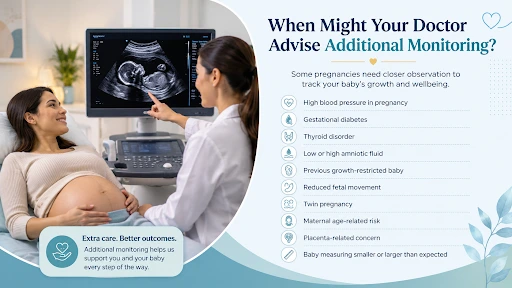
Growth scans are especially helpful when symptoms are unclear. A mother may feel fine, but the scan may show whether the baby needs closer observation.
Every Little Growth Milestone Matters
Growth scans in the second and third trimesters help track your baby’s size, wellbeing, fluid level, placenta, and position. They also support timely decisions in routine and high-risk pregnancies.
For expert-led pregnancy ultrasound in Kolkata, Fetomat Wellness offers careful fetal monitoring and reassuring guidance.
People Also Ask Questions
1. What is a growth scan during pregnancy?
A growth scan is an ultrasound that checks your baby’s size, estimated weight, fluid level, placenta, and overall wellbeing. It helps doctors understand whether the baby is growing as expected.
2. When is a growth scan usually done?
Growth scans are commonly advised in the second or third trimester based on medical need.
Your doctor decides the timing depending on your pregnancy condition.
3. Is a growth scan painful?
No, a growth scan is usually painless and non-invasive. It uses ultrasound waves to create images of the baby inside the womb.
4. Why is a third trimester growth scan important?
It helps check baby weight, position, fluid level, placenta, and blood flow if needed.
This information can support safer delivery planning.
5. Can a growth scan detect a small baby?
Yes, it can help identify if the baby is measuring smaller than expected. The doctor may then advise follow-up scans or Doppler monitoring.
6. Can a growth scan detect a large baby?
Yes, the scan can estimate if the baby is larger than expected. This may be important in gestational diabetes or delivery planning.
7. What is Doppler in a growth scan?
Doppler checks blood flow between the mother, placenta, and baby. It is often advised when doctors need closer fetal wellbeing assessment.
8. How accurate is baby weight in a growth scan?
The scan gives an estimated fetal weight, not an exact birth weight. Doctors use it with other findings to understand the growth pattern.
9. Do all pregnant women need repeated growth scans?
No, repeated scans are usually advised when there is a medical reason. High-risk pregnancies may need closer and more frequent monitoring.
10. What should parents carry for a growth scan?
Carry previous ultrasound reports, blood test reports, and doctor’s prescription. These help the fetal medicine expert compare growth and guide you better.