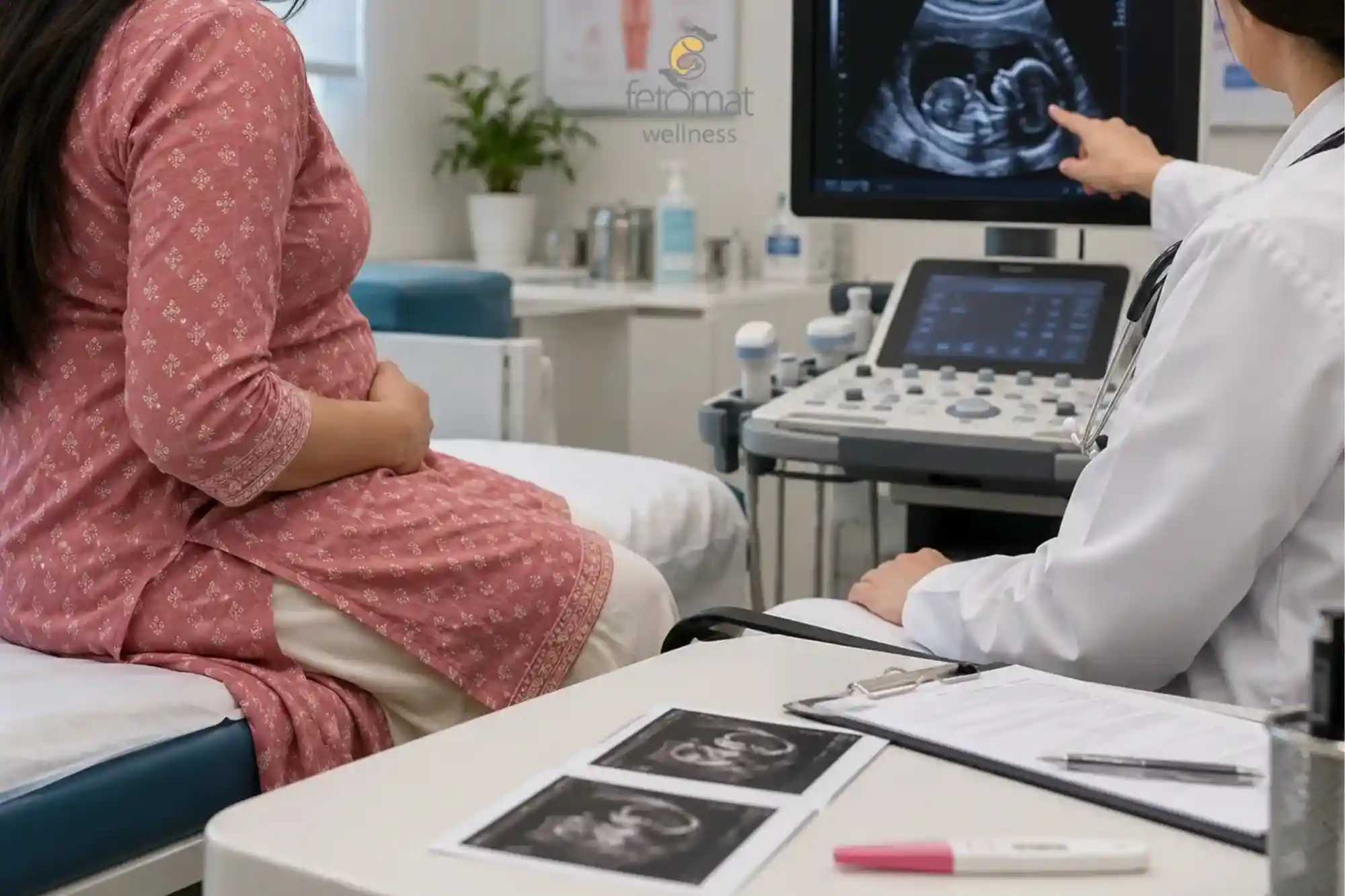
Imagine going through months with no morning sickness, no visible bump and, in some cases, even light monthly bleeding, and then finding out you are pregnant. It sounds unbelievable, but it happens. This is called a cryptic pregnancy, also known as a stealth pregnancy.
It is rare. Many Studies suggest that roughly 1 in 475 pregnancies goes unnoticed until about 20 weeks, and a far smaller number is discovered only at labour. Even so, every woman should know what it looks like, because late discovery means late care.
A gynaecologist at our fetal clinic explains that early detection improves outcomes for both mother and baby. This guide covers what a cryptic pregnancy is, why it happens, the signs to watch for, how it is diagnosed and what care follows.
What Is a Cryptic Pregnancy?
A cryptic pregnancy is one that goes undetected for part of its duration or, rarely, until delivery. The woman does not recognise the usual signals, and home pregnancy tests may even read negative.
There are two broad types:
- Unrecognised pregnancy: symptoms are minimal or are mistaken for something else, such as stress, weight gain or irregular cycles.
- Denied pregnancy: the woman may have some awareness but, often because of psychological factors, does not fully acknowledge it.
What Causes a Cryptic Pregnancy?
There is rarely a single reason. Specialists at the best infertility evaluation treatment clinic point to a mix of hormonal, physical and emotional factors.
Hormonal imbalances. Fluctuating oestrogen and progesterone levels can disturb ovulation and the menstrual cycle. Irregular or missed periods then look “normal” for that woman, so pregnancy is not suspected.
Irregular ovulation and PCOS. Women with polycystic ovary syndrome (PCOS) often have unpredictable cycles. Since a missed period is nothing new to them, an early pregnancy is easy to overlook.
Contraceptive failure. Birth control pills and IUDs are highly effective but not 100% foolproof. A woman using contraception may not even consider pregnancy, which delays testing.
Perimenopause. In the years before menopause, periods become erratic and fatigue, mood swings and weight changes are common. Many women assume these are signs of menopause, not realising that pregnancy is still possible.
Psychological factors. Stress, anxiety, fear or denial can lead a woman to unconsciously dismiss the signs of pregnancy. It is more common than people think and has nothing to do with intelligence or carelessness.
Postpartum and breastfeeding. If periods have not returned after a previous delivery, there is no missed period to raise an alarm.
Body type and baby’s position. If the baby sits toward the back of the uterus, the belly may stay small, and a bump may barely show.
Cryptic Pregnancy Symptoms to Look Out For
The difficulty is that symptoms are often absent or very mild. Watch for these:
- No typical pregnancy symptoms: No nausea, breast tenderness, food aversions or frequent urination.
- Light or irregular bleeding: This is usually spotting, lighter than a normal period.
- Minimal weight gain: Small enough to go unnoticed.
- Little or no visible bump: The belly may look bloated rather than pregnant.
- Unexplained fatigue or bloating: Often blamed on work, stress or diet.
- Faint movements: These may be mistaken for gas, indigestion or muscle twitches.
- Negative home pregnancy test: A test can read negative when hormone levels are low, or the test is not done correctly.
If you notice any of these along with a feeling that something has changed, do not ignore it. Speak to your gynaecologist and undergo the appropriate fertility tests for women to confirm or rule out a pregnancy.
How Is a Cryptic Pregnancy Diagnosed?
Because the signs are subtle, diagnosis depends on clinical tests rather than symptoms alone. A gynaecologist at a fertility clinic will typically recommend:
- Blood test (serum beta-hCG): It measures pregnancy hormone levels in the blood and is more sensitive than a urine test, so it can detect pregnancy even when a home test is negative.
- Ultrasound scan: A scan confirms the pregnancy, shows the baby’s growth and helps determine gestational age. It is the most reliable way to confirm a cryptic pregnancy.
- Pelvic examination: The doctor checks for physical changes such as an enlarged uterus or a softened cervix.
- Medical history review: The doctor looks at your cycle pattern, contraceptive use, previous pregnancies and any hormonal conditions.
Why Late Detection Needs Extra Attention
When a pregnancy is found late, the baby may have missed important early care. Possible concerns include:
- Delayed or no folic acid supplementation in the early weeks
- Exposure to medicines, alcohol or smoking before the pregnancy was known
- Missed early screening tests
- A higher chance of premature birth and low birth weight
- Unmanaged conditions such as high blood pressure or diabetes
The good news is that many women diagnosed late go on to have healthy babies once proper care begins.
Care After Diagnosis
Once the pregnancy is confirmed, the focus shifts to catching up on prenatal care without delay. A fetal medicine specialist can review how far the pregnancy has progressed and plan the right scans and tests for you.
Your doctor will usually begin with a pregnancy ultrasound in Kolkata to confirm the due date and check the baby’s growth. From there, the following checks are commonly advised:
- Early screening scan: The NT scan is done between 11 and 14 weeks. If you have already passed this window, your doctor will suggest alternative screening options.
- Detailed anatomy check: An Anomaly Scan, usually performed between 18 and 22 weeks, examines the baby’s organs and structure closely.
- Blood flow and growth monitoring: A fetal Doppler scan assesses the blood flow to the baby and helps track growth, which is especially useful when the pregnancy was identified late.
- Baseline health tests: A Pregnancy Profile covers key blood tests such as haemoglobin, blood group, thyroid and infection screening, so any underlying problem is identified early.
If the mother has a medical condition, is in perimenopause, or the pregnancy is found at an advanced stage, high-risk pregnancy care can ensure closer monitoring and a safer delivery plan.
When Should You See a Doctor?
Book an appointment if:
- You have missed a period and are sexually active, even if you use contraception
- You feel unexplained movements in your abdomen
- Your abdomen is growing without a clear reason
- You had a negative home test, but your body still feels “different”
- You are in perimenopause and notice new symptoms
Final Thoughts
A cryptic pregnancy can happen to anyone, regardless of age, health or contraceptive use. Knowing the signs and acting early protects both you and your baby. If something feels off, trust your instincts and get a simple blood test and scan done. An early answer always brings peace of mind.
If you have concerns about an unexpected pregnancy, consult the experienced team at Fetomat, a trusted Fetal clinic in Kolkata, for proper evaluation and guidance.
Frequently Asked Questions
1. Can a pregnancy test be negative in a cryptic pregnancy?
Yes. Low hormone levels, very early testing or irregular ovulation can cause a false negative. A blood test is more reliable.
2. Can you have periods during a cryptic pregnancy?
Some women have bleeding that looks like a period, but it is usually spotting or lighter than normal.
3. How long can a cryptic pregnancy go unnoticed?
It varies. Some women find out in the second trimester, while in rare cases it is discovered only at delivery.
4. Is a cryptic pregnancy dangerous?
The condition itself is not harmful, but delayed prenatal care can raise risks. Early diagnosis and proper care greatly improve outcomes.
5. Can it happen with an IUD or birth control pills?
Yes, though it is uncommon. No contraceptive method is 100% effective.
6. Which doctor should I consult?
A gynaecologist or fertility specialist can confirm the pregnancy with a blood test and ultrasound.